Students, faculty, staff, and community deserve the very best leadership I can possibly find, and you’re not going to get that for nothin’.
–Charlie Reed, Chancellor, California State University
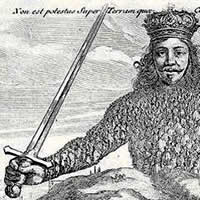 The “great man” theory of leadership suggests that leaders are “born not made.” In earlier centuries people believed that these qualities were a function of birthright; the children of monarchs and aristocrats were born to be leaders. Political philosopher Thomas Hobbes believed that a great leader could manage the inherent chaos of society by rising above his own narrow self interest and ruling in the interest of all of his subjects; a single individual acting as a “benevolent dictator” could advance the common good of a society and the individuals within it. This is an approach to leadership still adhered to in countries like North Korea, which is ruled by Dear Leader Kim Jong-Il.
Democratic theorists have long dismissed this theory of leadership. They question whether any individual is able to rise above his or her own narrow self interest and rule in the interests of society. They also wonder about the difficulties of identifying “great leaders.” They rely instead on the election of political leaders and the requirement that these leaders be subject to regular election to make leaders accountable to the “will of the people.” If the actions of the leader do not promote the interests of individuals within society it is the right of the people to replace him or her with a leader who will advance their interests. Democratic conceptions of leadership hold that “great leaders” are those individuals who are able to advance the interests of the greatest number in a society.
In the above quote from Chancellor Reed’s recent interview with the Humboldt Lumberjack, the student newspaper at Humboldt State University, Charlie Reed unwittingly lays bare his theory of leadership. The most important dimension of his job is to identify (and pay) great leaders for the 23 campuses of the CSU. In the absence of a great leader students, faculty, staff and community can not achieve their full potential.
Faculty and staff are secondary to the great leader; they are widgets that can be easily manipulated and replaced in service to the interests of the organization. This view is apparent in the Chancellor’s plans to move instruction to the internet. Once courses are designed they can be delivered on the internet by whichever instructor will accept the lowest pay. The Chancellor’s plan does not consider whether student outcomes are improved through on-line instruction. It denies the right of the person who designs the course to teach the course. It brings to mind the sad image of the middle manager training the person to which his job has been outsourced.
Who will control the selection of a great leader for each campus? The Chancellor of course. He is the great leader of great leaders. Reed is proposing that the CSU Board of Trustees adopt a procedure that would eliminate a campus visit for presidential candidates. Why do faculty and staff need to meet their future president? Great Leader Reed can choose for them. Presidents and their campuses will be united in arranged marriages where newly wedded partners first come into full view when they retire to the conjugal bed.
How should decisions be made on the campuses of the CSU? By the great leader who is chosen for them. The Chancellor’s proposals to faculty in contract negotiations seek to further centralize power in the offices of the campus presidents. For instance, at one point in the negotiations the Chancellor proposed that curriculum decisions be approved by the campus president and a faculty advisory board appointed by the president. Currently that responsibility rests with the Faculty Senate in conjunction with the president. The Chancellor is also proposing more power for presidents to reject sabbaticals that are approved by a faculty committee.
According to the Chancellor, because great leaders are necessary for a successful institution they must be paid much more than the rank and file workforce. After all, students, faculty, staff and community are really just adjuncts of the great leader. It is the combination of the individuals who add up to the greatness of the leader. While we must provide a salary incentive to hire the best leaders, no such incentive is necessary for faculty and staff. They are easily replaceable. Not so the great leader.
I admit that the quality of a campus president is important. I am fortunate at CI to work with the best college president of my career. The reason for his success is the understanding that the campus can only succeed when the faculty and staff are valued, and encouraged to reach their full potential. But clearly there are other campuses in the CSU where things are not working out so well, despite the Chancellor’s “exemplary” choicing skills.
Charlie Reed’s theory of leadership belongs to another time, and even then it was highly suspect. Certainly it is not appropriate for the CSU or for any complex institution in the 21st Century.