***I was asked to contribute to a beer blog. The topic was beer labels, beer caps, and coasters. I thought I would post the essay here, just for the fun of it. It is the Friday before the Labor Day weekend when many of us will drink a few beers, so I hope you enjoy the essay, or at least the long weekend.***
I’ve decided to go retro. I want to remember beer from the 1970s, as forgettable as most of it was. Growing up in Washington State in the 1970s, before Coors had national distribution, I remember my parents telling friends coming from Idaho “you’ve got to bring us Coors!” Was that really the best we could do in the 1970s?
For the most part, yes! Growing up in the Northwest we were “blessed” with some regional breweries like Rainier (known for its outstanding advertising) and Olympia (“It’s the water, and a lot more”). It was nothing like the riches we have today when we walk into a supermarket or specialty beer store. Remember that it was not until the late 1970s that Jimmy Carter signed bill legalizing home brewing and winemaking, which led to the craft beer revolution.
One thing I remem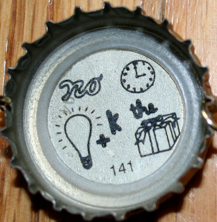 ber as a kid—my parents, relatives, and all their friends drank a lot of beer—are the rebus puzzles that would appear in beer bottle caps. As kids we could not wait to decipher the hidden messages. If you are interested in seeing more of these—and deconstructing some of the less than politically correct images that were used—there is a terrific site with hundreds of them.
I am kind of surprised that more breweries these days do not use their beer caps in such a creative way. Some, like Magic Hat, will put witty little sayings in the caps (and that is cool), but these little puzzles and jokes were just a blast.
The 1970s were marked by economic recession after economic recession. During those years frugality was encouraged, and marketing companies played to the demand for reasonably priced products. One such product: 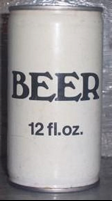 Generic beer. “Beer Beer” as we called it. The argument was that the price of beer (and any number of other products) could be kept low for consumers by neglecting all the fancy designs and packaging. The words on the can or bottle let you know what it was: BEER. What was in the can was not so fancy either. Lucky brand beer I am told. It was awful stuff, but it was cheap. Standing outside the local Albertson’s asking grown-ups to buy us some beer for the few dollars we had, Beer Beer did the trick.
I think I have succeeded in choosing the least impressive label possible! Blue on white. I have also succeeded in choosing the most unspectacular beer! And probably the cheapest too.
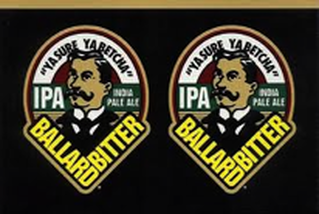 The craft beer industry flourished in the Great Northwest beginning in the early 1980s. One of the first craft beers to make an appearance around town was Redhook’s Ballard Bitter. I’ve always loved that Ballard Bitter label. It speaks volumes about my hometown. Ballard is a neighborhood in Seattle that—back in the day, before it became yuppified—was home to many Scandinavian immigrants and their descendents. The “Ya Sure Ya Betcha” slogan was a tip of the hat to the working class folks that lived in the area. The “Bitter,” of course, referred to the fact that this was an IPA. Of course Redhook is a national brand, and the Ballard Bitter appellation is replaced by the more generic Long Hammer name.
I cannot say with certainty that this was my introduction to craft brew. That was a lot of beers ago. But if it was that was a pretty good way to start a lifelong love of good beer. I sometimes wonder how beer ever survived the 1970s.