In a sign of the coming apocalypse I agree with the general tenor of George Will’s column in The Washington Post today. Will’s general complaint is about the trend toward administrative bloat in higher education, and the perversity of administrative pay.
For example, in 2009 the base salary of UC Berkeley’s vice chancellor for equity and inclusion was $194,000, almost four times that of starting assistant professors. And by 2006, academic administrators outnumbered faculty.
Where we part company is Will’s contention that bloat is driven by a liberal political agenda.
…UCSD lost three cancer researchers to Rice University, which offered them 40 percent pay increases. But UCSD found money to create a vice chancellorship for equity, diversity and inclusion…So taxpayers should pay more and parents and students should borrow more to fund administrative sprawl in the service of stale political agendas?
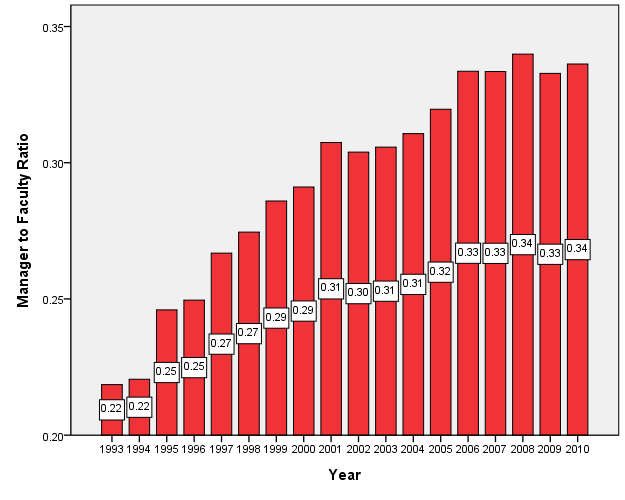
This and the other examples he offers are, indeed, grotesque and mostly indefensible. However, administrative bloat is far more generalized. Will offers examples of bureaucratic bloat that supports his conservative politics. The truth is that administrative bloat is generalized.
University administration has no “political agenda” other than to increase its own size. Period.
Administration will glom onto whatever “trend” is hot in The Chronicle of Higher Education. If “diversity education” is the latest trend–we have been teaching about diversity for decades, it is not “new” in academic circles–administration will justify the “need” for another administrator (or two or three) to “support the academic mission of the university.”
The logic behind hiring new administrators is easy. It goes something like this:
A full time faculty member is a thirty year investment. If we hire one they will likely get tenure and become a permanent cost to the university. Faculty are a burden on our budget. If we hire someone into a management position we can always get rid of them if we need to; after all, they are “at will” employees.
And thus managers are hired. And the dirty secret is this: The management position never goes away.
The personnel may change, the charge of the office may morph; but the position never goes away. And so, the ranks of faculty shrink while the ranks of management swell. And at the end of the day the CSU spends just 35% of its budget on instruction. Where does the other 65% go? Wonder no more.