
Browse Exhibits (6 total)

This exhibit examines Jane Tolmach's connection with the two-time Democratic nominee for President, Adlai Stevenson.
Born in Havre, Montana, November 12, 1921, Jane McCormick's family moved to Ventura County when she was two years old. A graduate of UCLA and Smith College, she married Dr. Daniel Tolmach. The couple settled in Oxnard, California, in 1948.
Her involvement in national politics began by hosting coffee fundraisers for Democratic presidential hopeful Senator Estes Kefauver (TN) in 1954. She supported Stevenson for the nomination in 1956, raising funds for the Stevenson-Kefauver ticket and attending the 1956 Democratic National Convention in Chicago, Illinois.
Her collection includes several compelling pieces from this period.
John Flynn, a long-serving member of the Ventura County Board of Supervisors told the Ventura County Star that Tolmach "got people to follow her because of her unassuming nature." Tolmach, Flynn continued "didn’t think she was better than anyone else..."
It may be that her modesty, intellect, and concern for ordinary people is what drew her support for Adlai Stevenson. Stevenson shared these same qualities. In 1956 Tolmach was an active supporter of Stevenson.
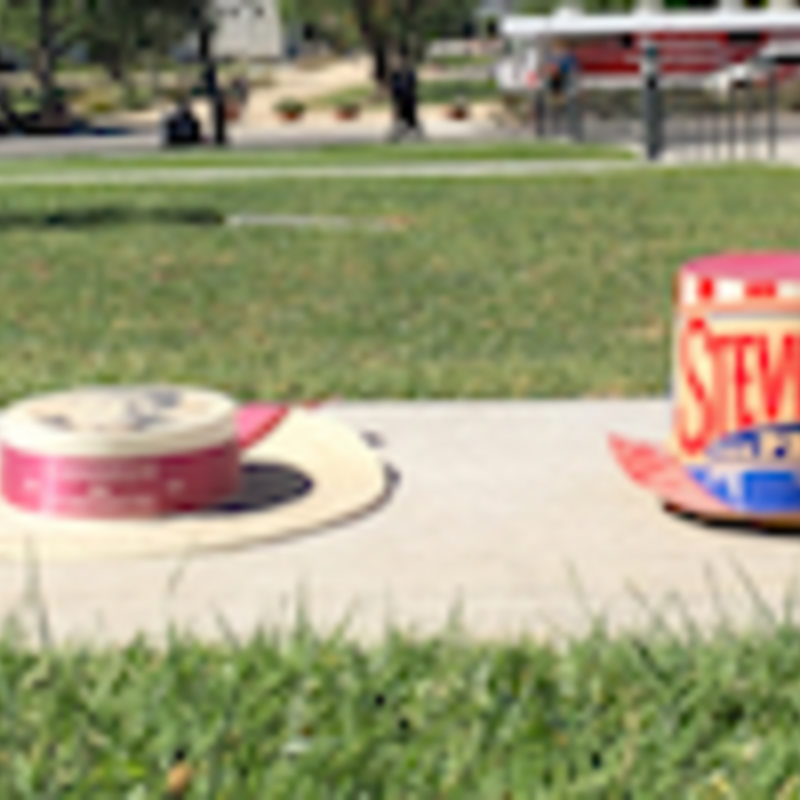
Donald Trump’s Make America Great Again” red baseball cap became ubiquitous during the 2016 Presidential Election. Campaign hats and political ephemera are a highlight of presidential nomination conventions and elections. Using political ephemera donated to CSU Channel Islands by a Ventura County activist and politician Jane Tolmach, we digitized and curated a digital exhibition demonstrating how campaign hats modernized over the years of 1956-2016. The main focus of our exhibition is the presidential campaigns of Adlai Stevenson (1956), John F. Kennedy (1960), Lyndon B. Johnson vs. Barry Goldwater (1964), and Richard Nixon (1968). We incorporate these five candidates to illustrate the story of their candidacy beginning with campaign hats and other memorabilia that related to their campaign. With the addition of campaign memorabilia, we tell the candidates’ story: what each object represents and how it relates to them.
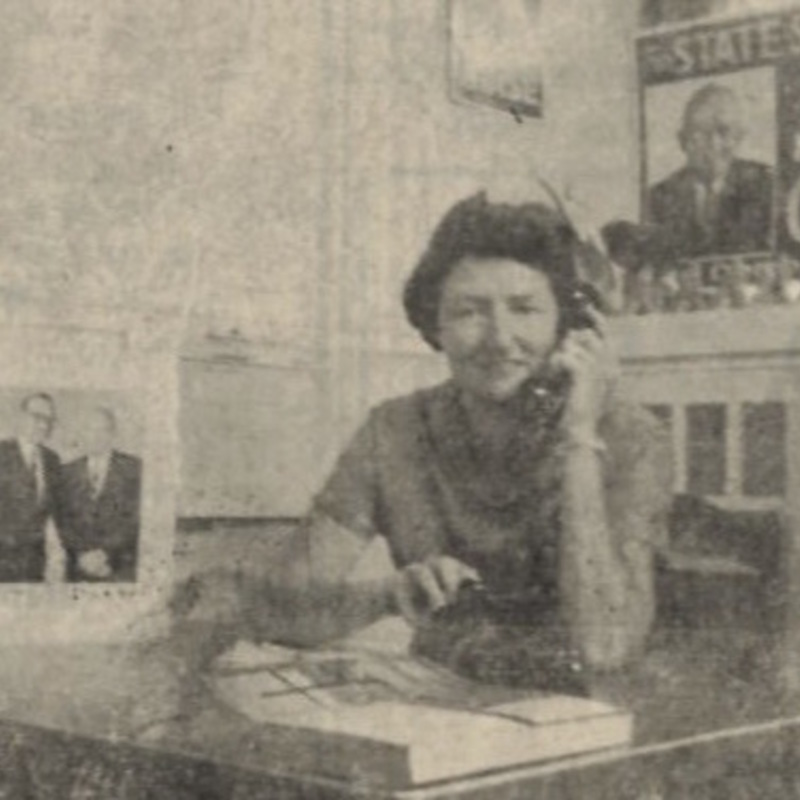
Since the growth of women’s political movement, the role of women in politics has been elevated by many motivated individuals. The importance of studying this growth is crucial to see how far women have come and how individuals have influenced this change. The goal of this exhibit is to show how Jane Tolmach has helped pave the way for women in politics today through her community contributions and her passion for political activism.
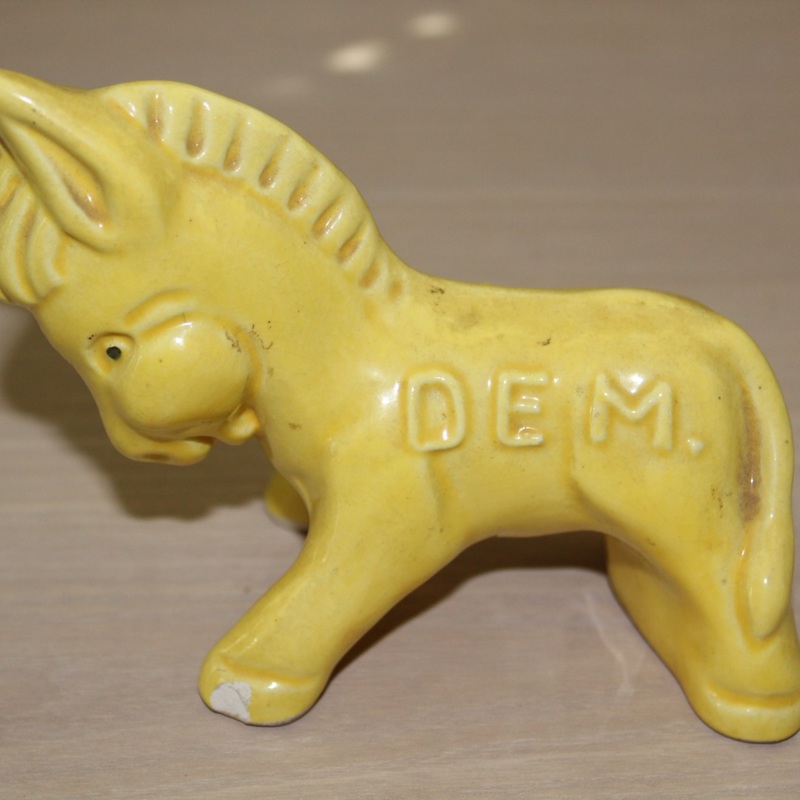
This exhibit examines the Democratic Losers who ran for presidency among the 1960's. Through the use of the Jane Tolmach collection, we will be discussing what their tactics were and what they did while running for election. The "losers" we will be focusing on include Stevenson, McGovern, Pat Brown, and Humphrey.
Starting in the early 1950’s women’s prominence in politics has increased significantly. Our project examines women’s influence in politics and the progression of their campaigns as well as their careers over the span of Jane Tolmach’s life. We also provide a comparison to what was going on in society and American pop culture. The purpose of this project is to highlight women and their careers as well as their influence on men’s careers. Using historical references from campaign buttons, honorary medals, letters, campaign mail, pins, photos, and newspapers. We will be examining ephemera from the campaigns of Jane Tolmach, Kathleen Brown, Dianne Feinstein and Barbara Boxer. Our presentation illustrates the impact of strong female over the span of Jane’s life. We digitized these items from the Jane Tolmach collection and found commonalities between the rise of women to power and politics. Women in office or women who play important roles have been vulnerable to discrimination due to their gender. Men are not judged or criticized as harshly as women because they have the reputation of knowing what do in any situation. That is the wrong perspective we want to portray in today's society and it was the wrong perspective that was being portrayed during Tolmach's life as well. We are here to shine the light on key women in both politics and society that made an impact during that timespan and that deserve to be remembered till this day.